In March 2026, DRAW Space is excited to present FILAMENT
FILAMENT explores the line as a fundamental structure which enables the break down and reconstitution of three-dimensional forms. While the two-dimensional line has a well established history of mark-making and allusion to mass and depth, the three-dimensional line has a genealogy in craft, sculpture and high end technology. Processes such as weaving, knitting, 3D printing and laser scanning are capable of creating complex form by processing one line at a time.
Anthropologist Tim Ingold notes the ubiquity of the line in both actions and physical structures. Human activities such as speech, music, growth and travel operate linearly. Both organic and non-organic bodies comprise linear structures as fibres, veins, branches, roots and needles. This exhibition gathers nine artists who through varied motivations, implement the three dimensional linear structure as a means for mobility between form and abstraction, growth and disintegration.
The exhibition is curated by Sarah Eddowes and features the work of artists Benjamin Chevalier, Sadhbha Cockburn, Kathryn Cowen, Jacqui Driver, Sarah Eddowes, Annabelle McEwen, Shane Nicholas, Mandy Robinson and Maya Stocks.
FILAMENT by Sarah Eddowes
The three-dimensional line is ubiquitous in the fabric of the organic world. It can denote growth, as in fibres, whiskers and tendrils, as well as interconnecting networks; veins, nerves, roots and fungi. In the constructed image it is also a fundamental structure for making. Processing one simple linear component at a time enables complex three-dimensional creation. Yarn is interwoven into textiles, coils of clay are stacked into vessels, fibres are knotted into baskets. Extending on these manual techniques, in digital fabrication, the 3D line is often the backbone of image and object making. Virtual 3D objects are made of connecting points in space with lines, forming ‘meshes’. Other mechanical techniques such as 3D printing, CNC routing or laser-cutting render intricate forms one line at a time. The 3D line enables growth and interconnection while equally leading to disintegration through unravelling, fissures and chaotic tangles. This exhibition brings together nine artists who operate across this shared language of the three-dimensional line in both mechanical and manual techniques. They make material connections between the behaviour of particular filaments and their own personal themes.
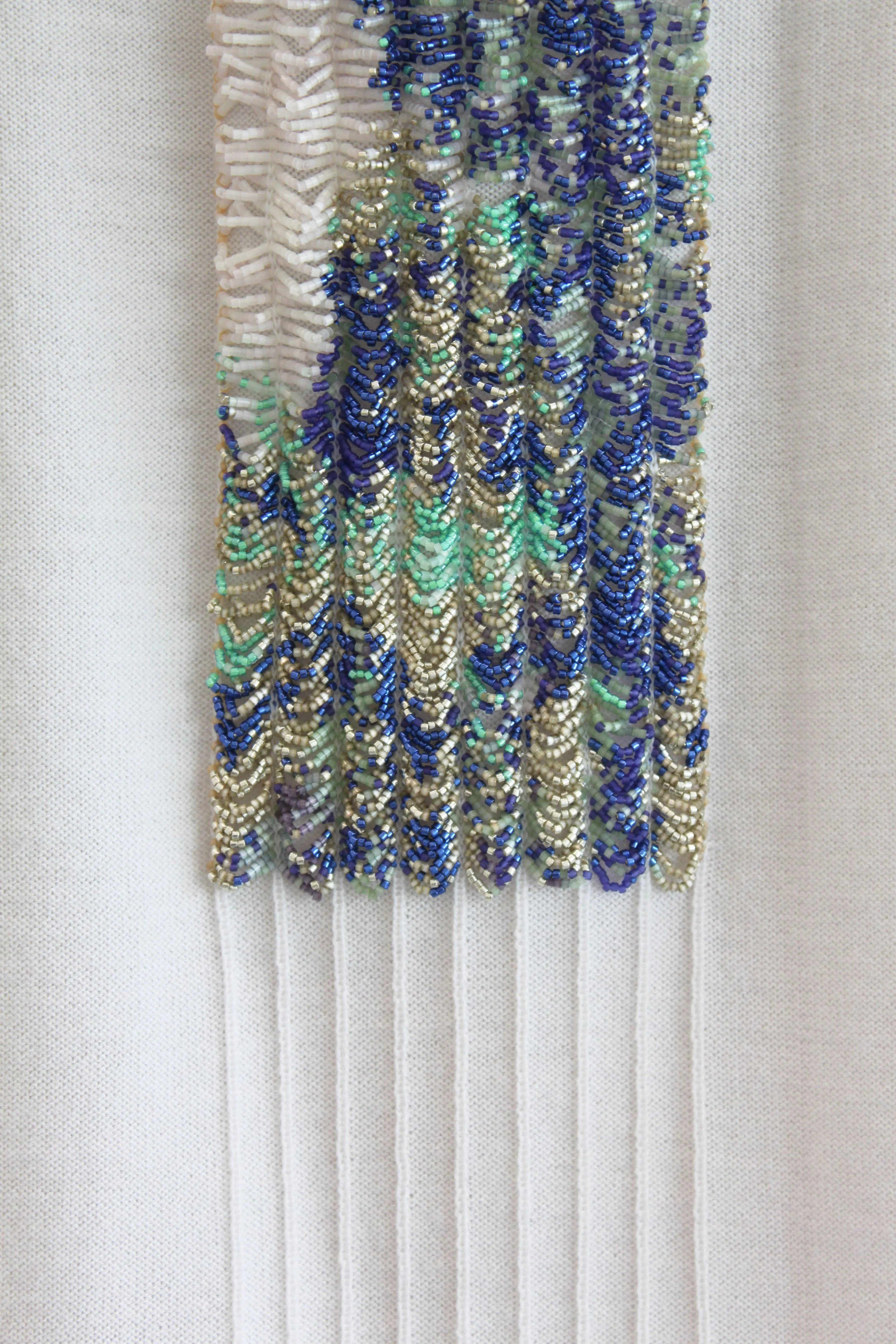
Benjamin Chevalier interweaves mechanical knitting with manual beading to create Tapestry Tank Top (2026). The process leading to this work sees a length of woollen yarn oscillating between one, two and three dimensions. It transforms from a two-dimensional image to a one-dimensional sequence of colours, to a two-dimensional beaded grid to a three-dimensional garment with drape and texture. Throughout the journey of this line of yarn, the orderly mesh of gridded pixels and precise sequencing pushes against the resistance of the inevitable inconsistencies of manual process and material.
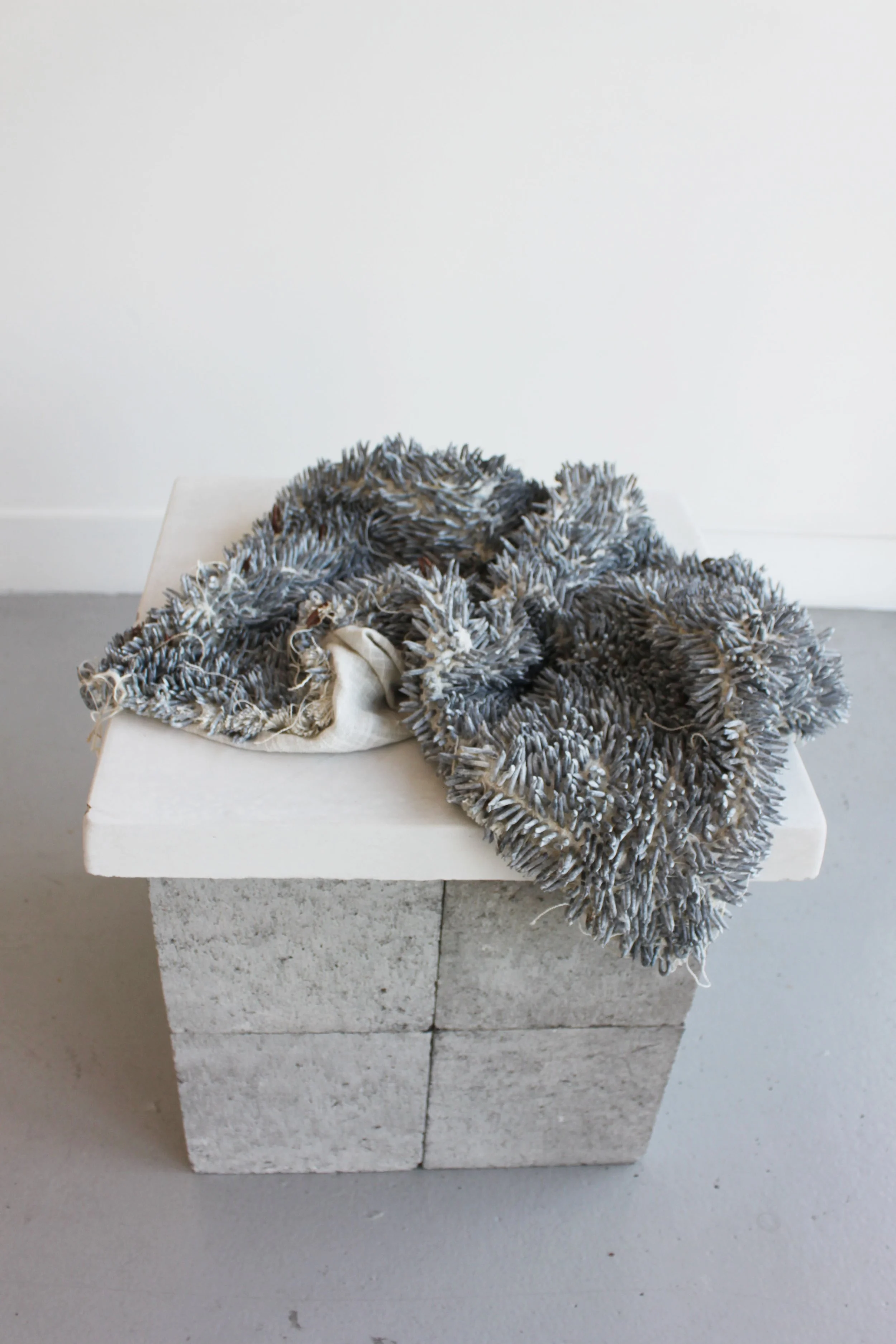
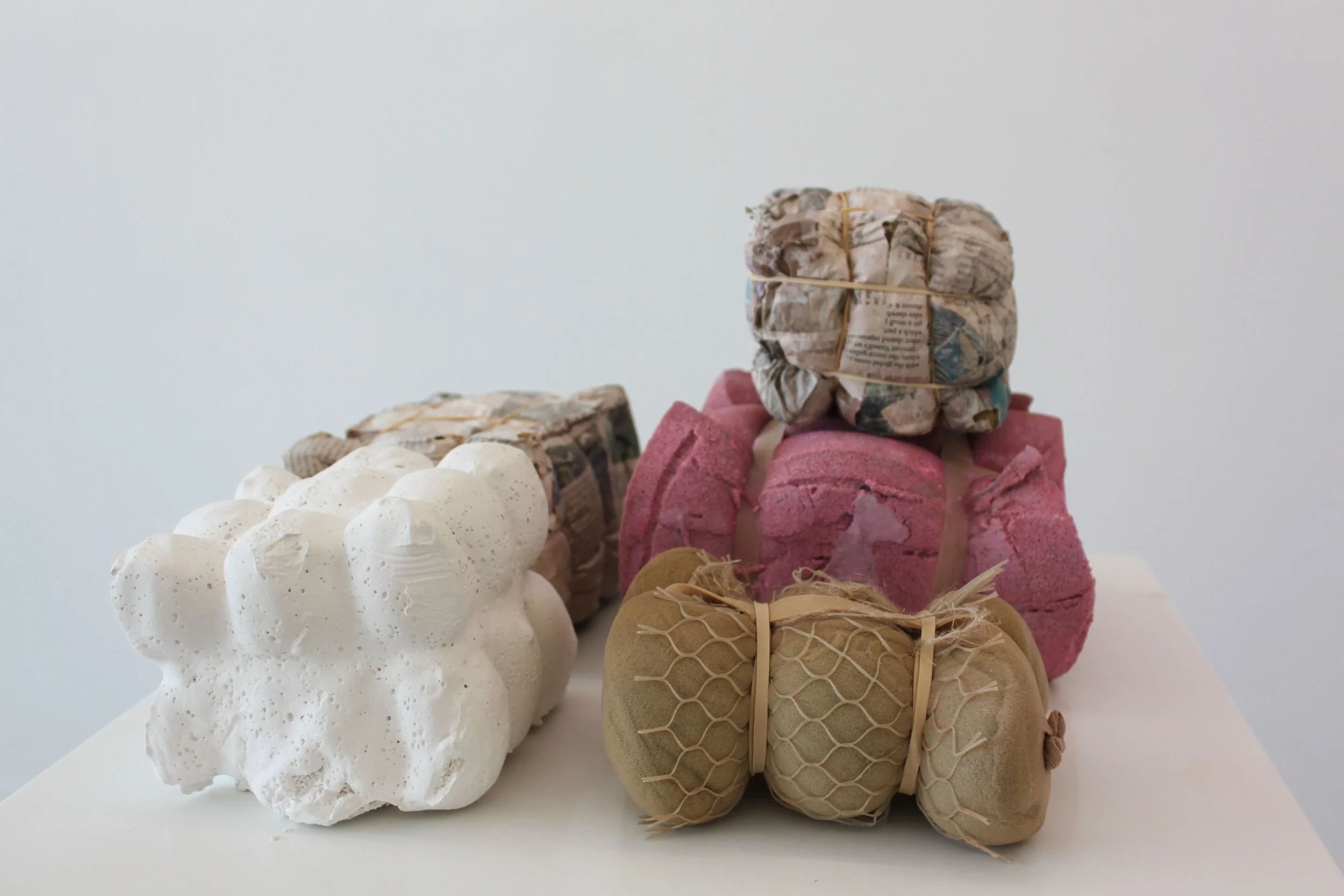
Maya Stocks locates the mesh structure in diverse settings from chicken wire to fishing nets, demonstrated in her Soft Bodies (2024). The mesh is a surface that maps space in a particular way, forming a surface of nodes from the interconnection of discrete lines. Stocks brings structural mesh together with ‘soft’ nebulous matter such as upholstery foam and plaster, exploring how each tries to consume and engulf the other. These are simple everyday objects, casually made and arranged, in which form and formlessness try to coexist.
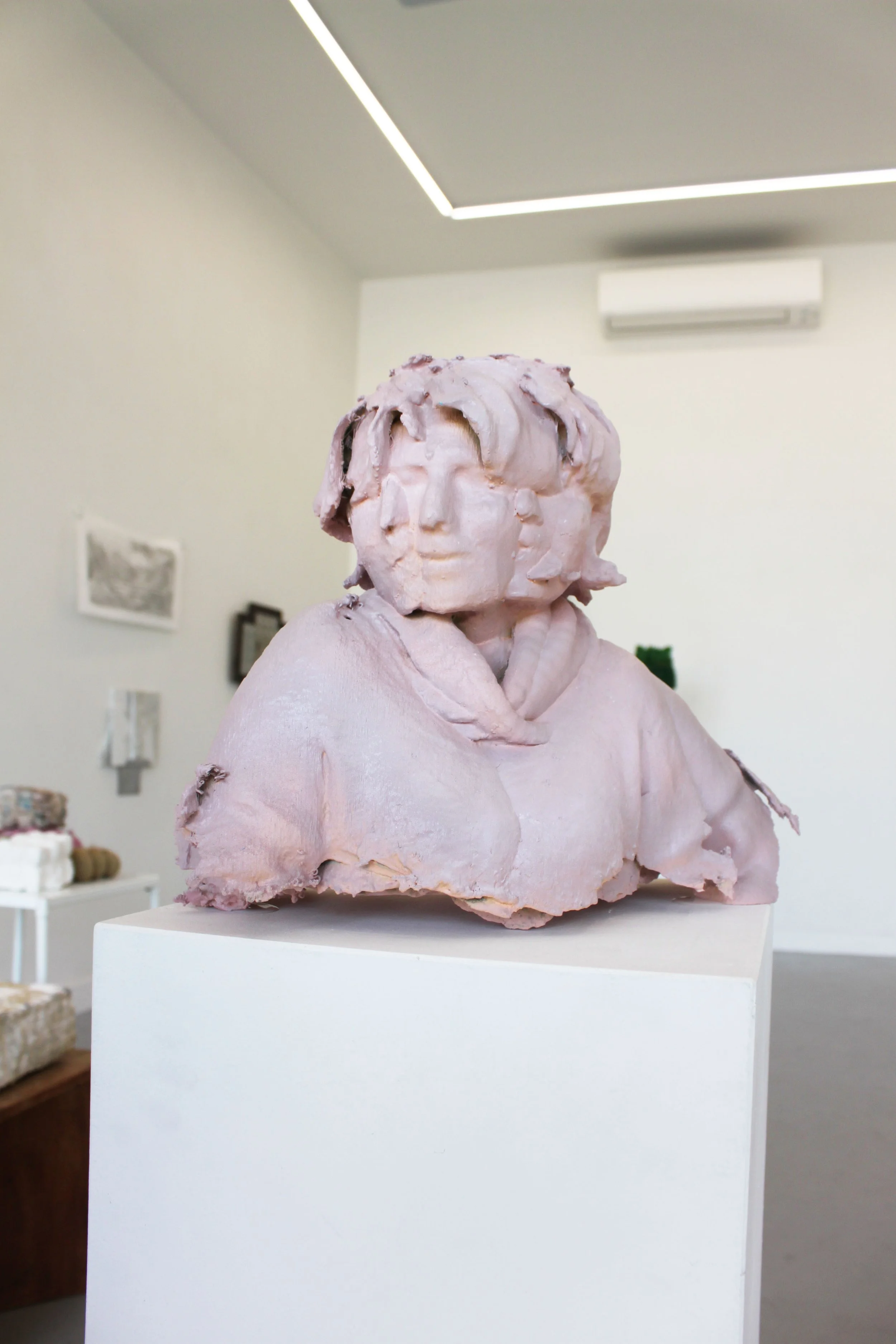
Three-dimensional mesh is the framework for Shane Nicholas’ ghostly figures, Arlen (2022) and Nina (2022). Nicholas uses the ‘Kinect’, a 3D scanning device intended for gaming, to generate forms which manifest the slippage and misreadings of computer vision. Through this material process, he explores the biases of surveillance technologies and human data capture. The disfigured forms are 3D printed, built up one filament outline at a time. This mechanical process creates a further layering of material slippage, where we see the layering and irregularities of the filament.
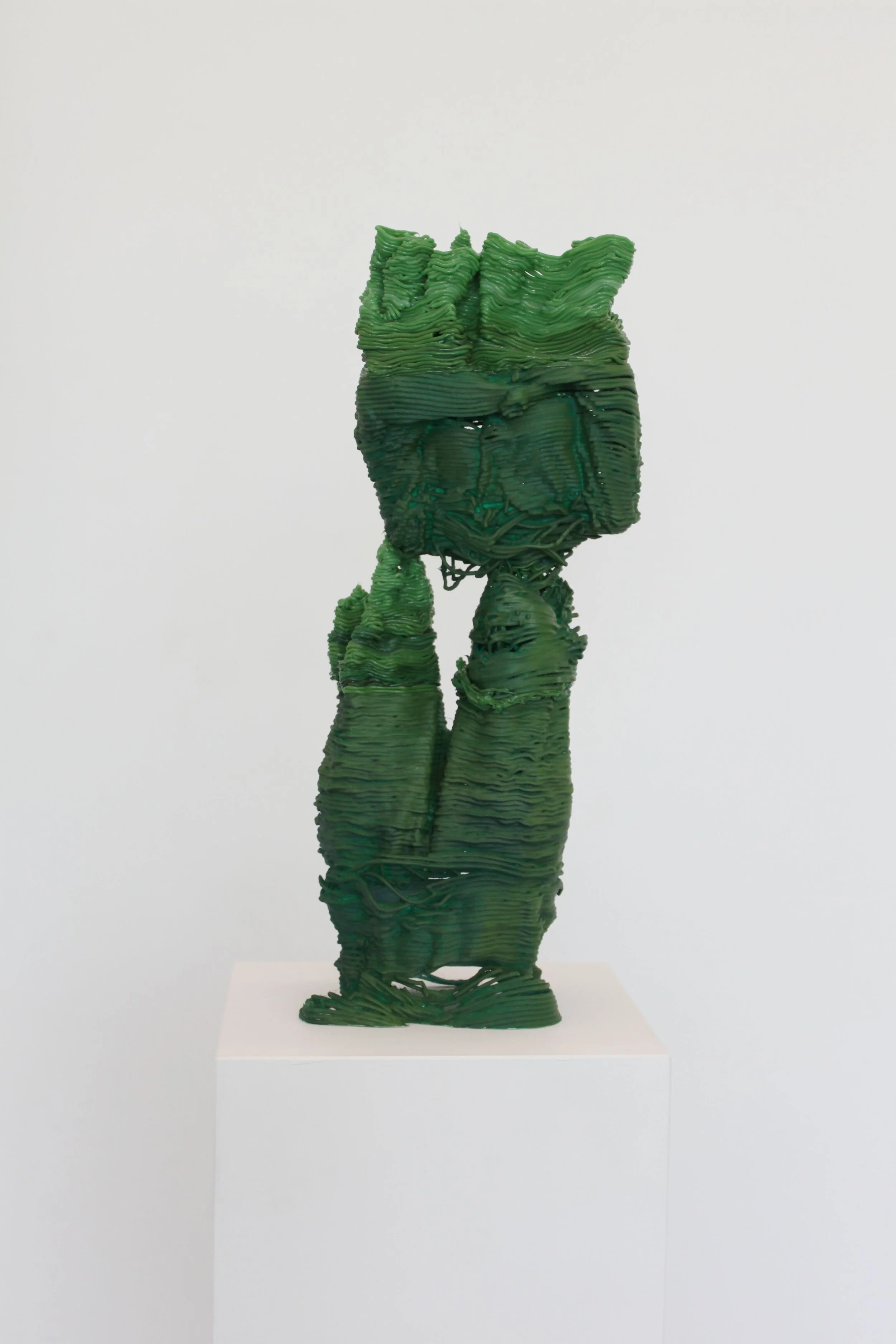
Sarah Eddowes work, Unravelling (2026) expresses a resonance between her corporeal experience and material processes in both virtual and physical realms, created through 3D visualisation, 3D printing and manual extrusion of material. Her work expresses an affinity between the human body and non-human materials, united in their capacity to be shaped, to react and to resist. Unravelling amplifies the presence of the extruded line of 3D printing, exposing how these structures determine the generation of images as well as their distortion and disintegration.
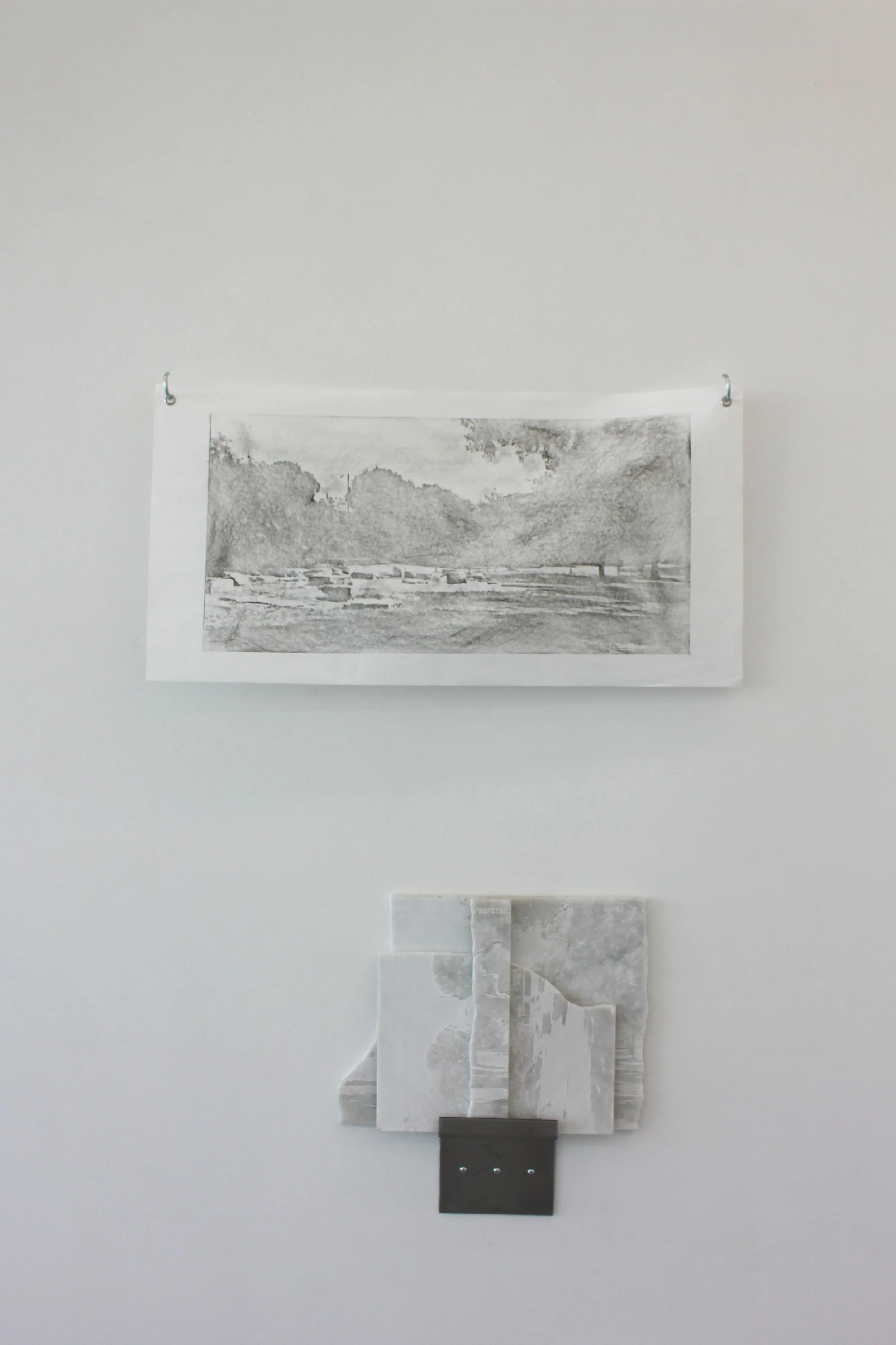
Also drawing on mechanical approaches to imagery, Annabelle McEwen uses material-based processes; screen printing, frottage and marble sculpture to resist the structural lines of the mediated and technological image. The tonal image seen in Walking Shadow (body cam) (2026) is made out by a series of variegated lines laser-cut into the heavy marble. Like the incising containers of Stocks’ cubes, these lines cut away matter rather than build. Layered with these mechanical lines are the gestural lines created by McEwen’s body through frottage.
In Naturo-synthetica (2026), Kathryn Cowen uses the 3D line to create a sense of organic growth, luring her paintings out of the wall in enquiring antennae and twisting pipes. Her works recall linear biomorphic forms such as fungi, lichen and cacti. The paintings in this assemblage have a sense of the inherent life of matter, on the verge of bubbling, spawning and sprouting. The three-dimensional linear elements give that innate life an outlet, channelling energy into growth.
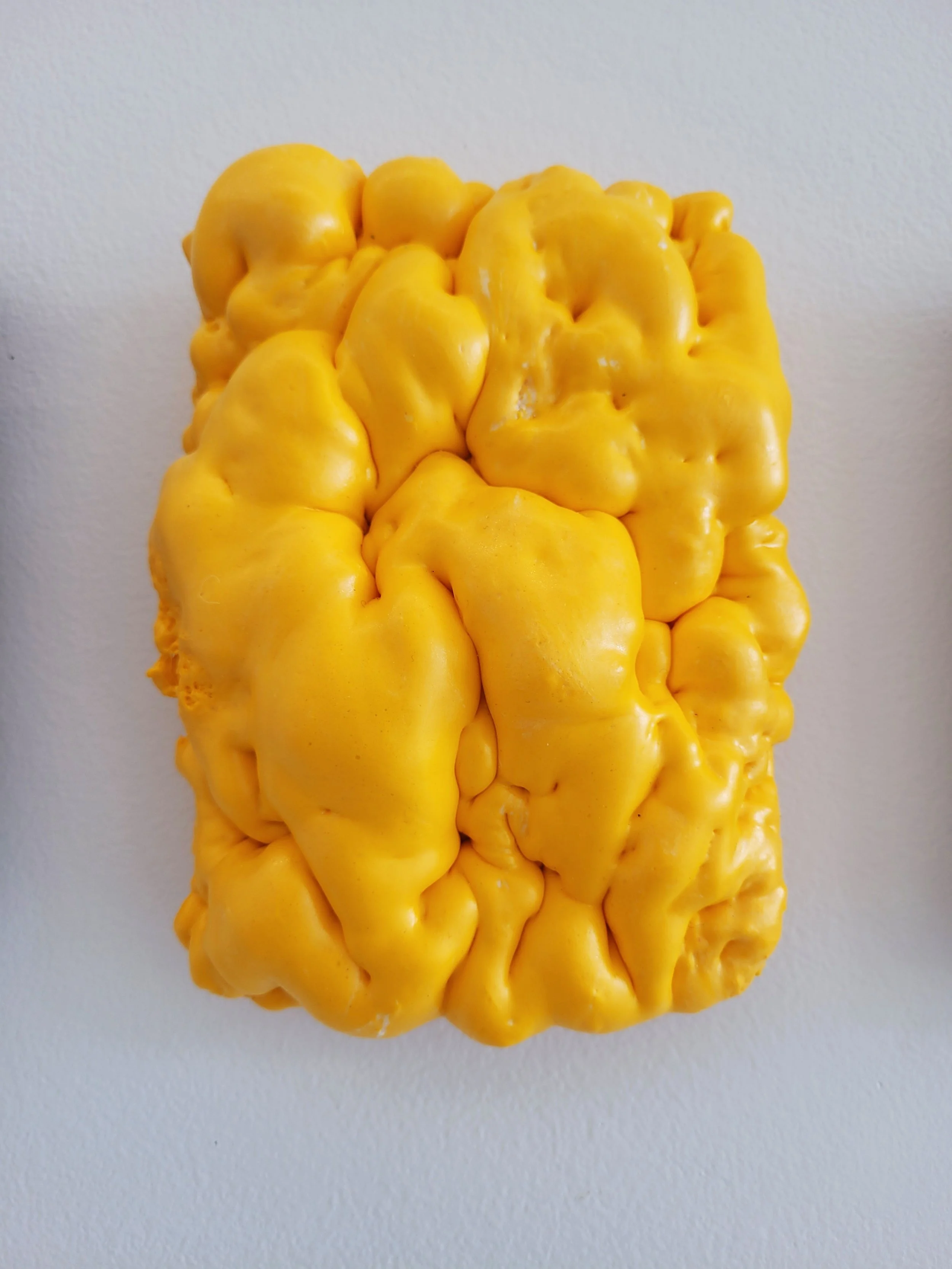
In her works un (2026) and home (2026), Sadhbha Cockburn juxtaposes ‘soft’ domestic materials with rigid industrial fencing staples to explore the construct, fabrication and the feeling of home. In these works, the line operates in contrasting ways. In un, unruly fibres are ensnared by the rigid staples, tamed, as it were into a flat rectangular surface. In home, by contrast, the sharp barbs of the staples defy the embrace of the linen, bursting out, hostile and charged.
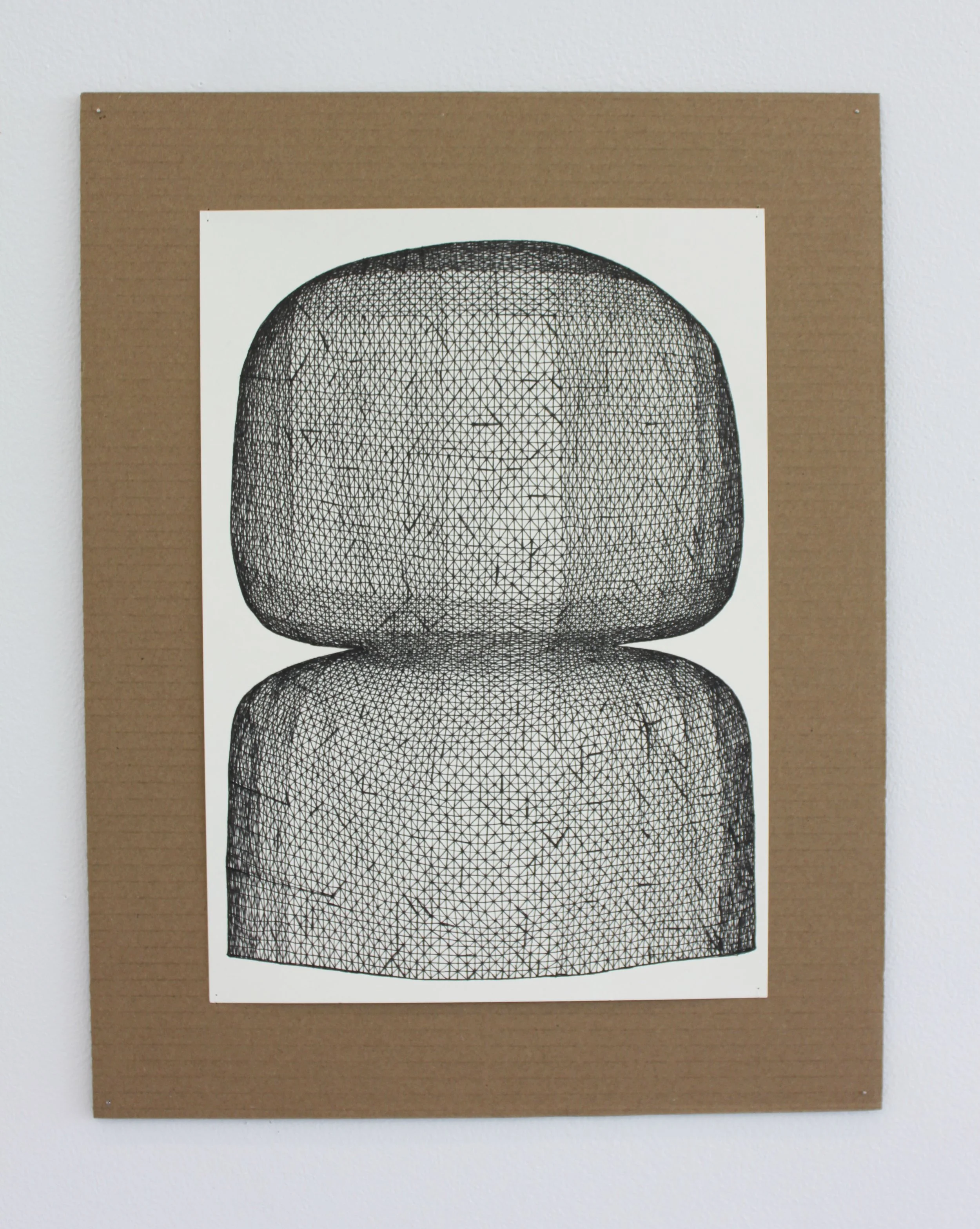
Mandy Robinson uses repetitive marks to build up a mesh which renders bulbous three-dimensional forms. In this slow accretive process, the artist executes one small line at a time, creating a still and meditative space in making. Robinson’s forms suggest a solidness and three-dimensionality to them, as if hewn from stone, or woven, basket-like from fibre. Despite these works resemblance to digital meshes, their subtle variations reveal their provenance from the movement between Robinson’s mind, body, pen and paper.
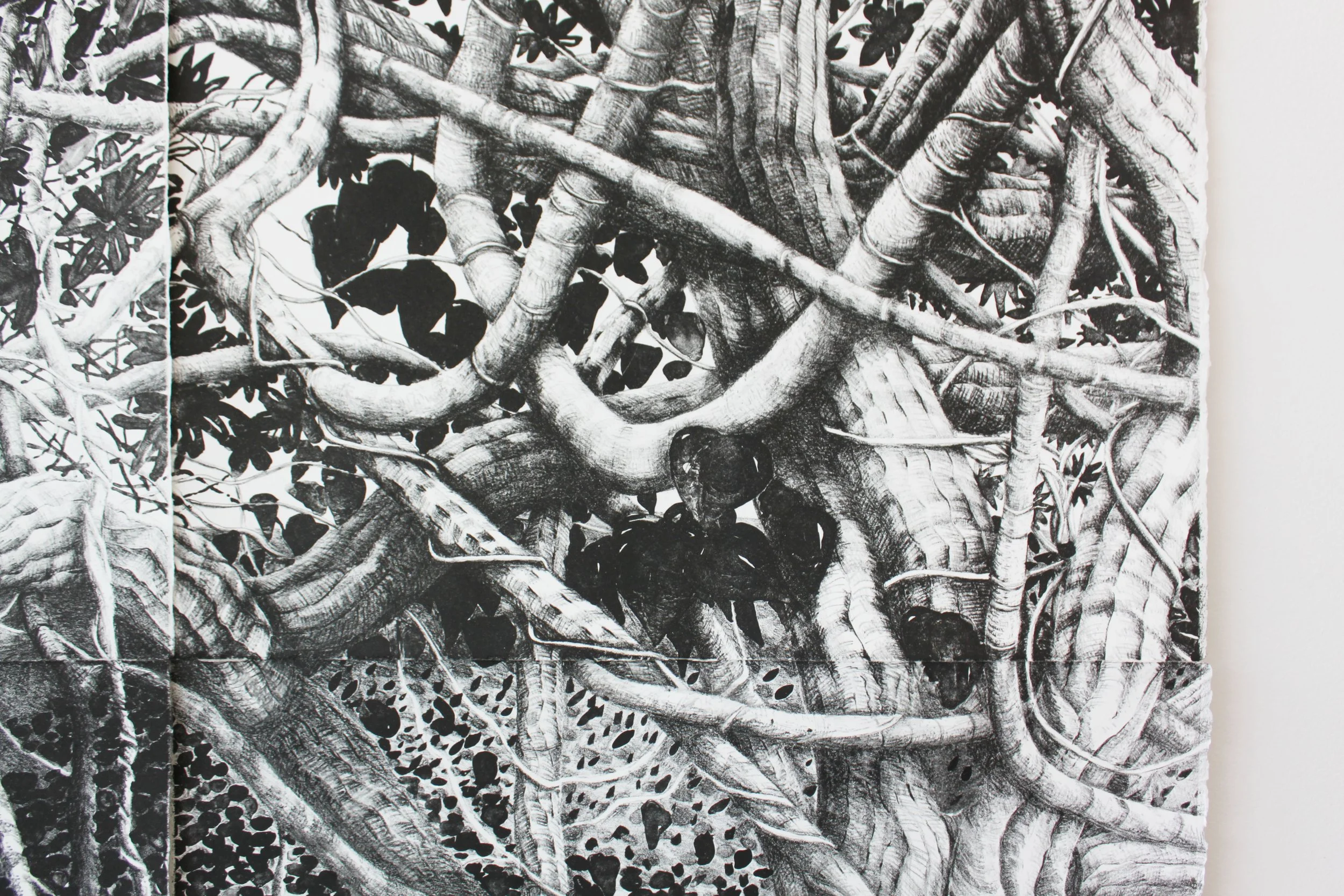
Similarly driven by the mental space offered by drawing, Jacqui Driver depicts the linear structures of tangled thickets. Through a process she terms ‘thicket thinking’, the artist immerses herself in the act of drawing and the tangles of the thickets to work through chronic physical pain. The branches seem to voraciously reach in all directions for light and nourishment. Despite the resulting chaotic and impenetrable mass, this complexity offers a focus outside of the body.
Across diverse themes, the artists in FILAMENT are united in their interrogation of the material form through its three-dimensional linear construction. By exploring various ways in which linear structures either resist or confine, these artists find a material-specific language for expression.
© Sarah Eddowes 2026