
Jeff Doring | James Grose | Tony Twigg – LIVES DRAWING
Curated by Gary Warner
Jeff Doring, James Grose, and Tony Twigg are artists who continue to work, explore, and expand their drawing practices in the later decades of their lives.
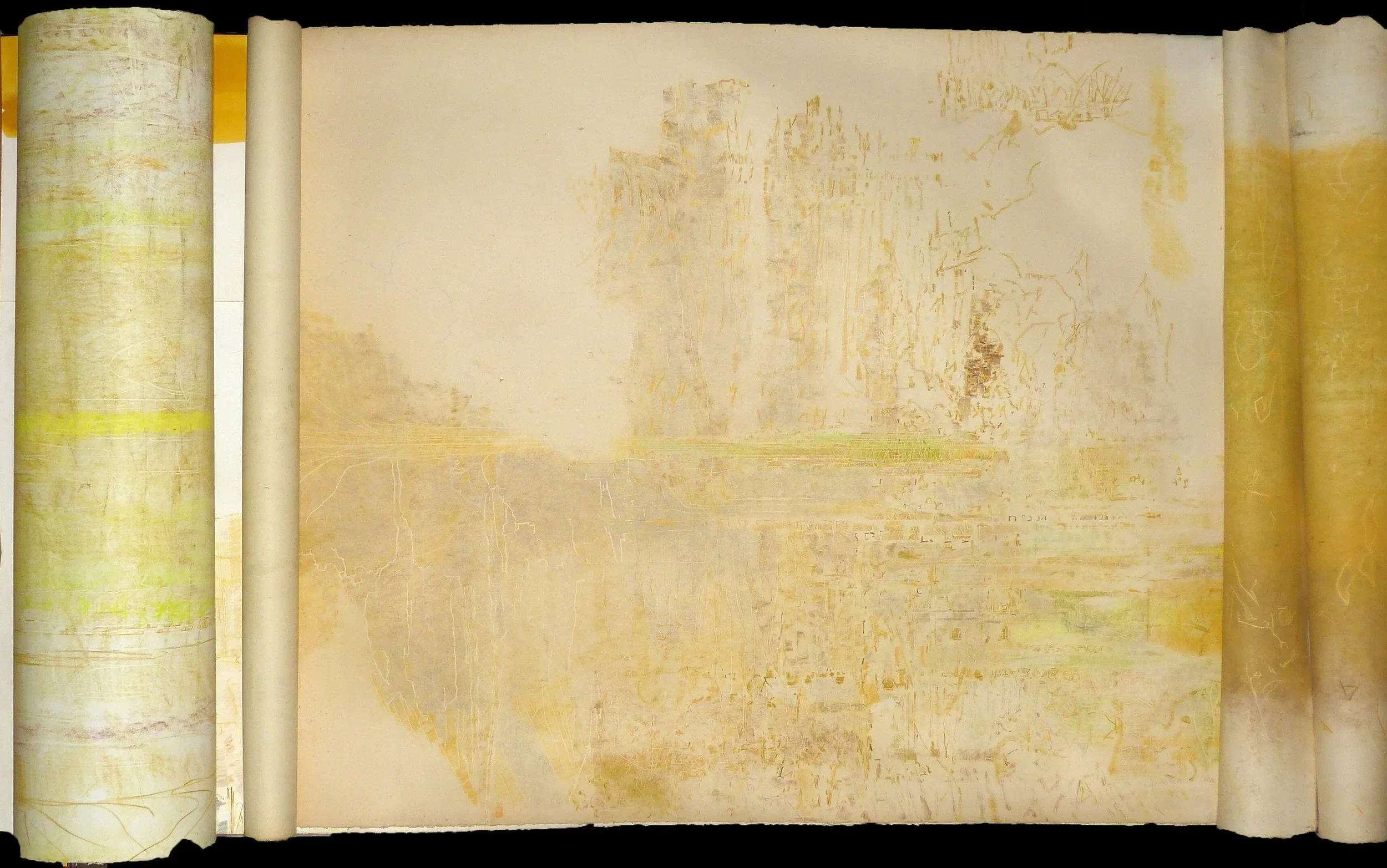
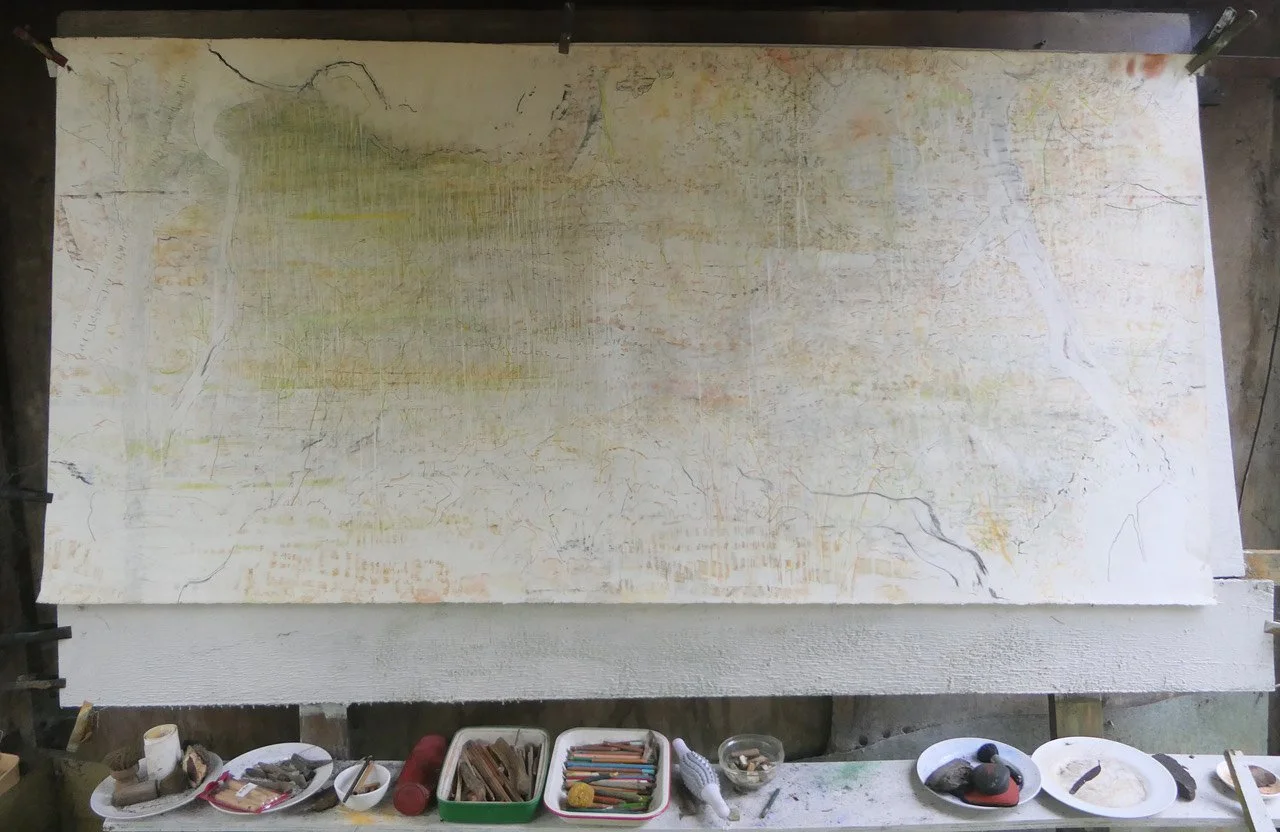
Jeff exhibited at Gallery A, Sydney, and made films focused on three visionary artists, Tidikawa, Morris Louis, and Wibalma, with the book Gwion Gwion. He draws in response to his experiences and the sandstone country at Origma creek where he lives.
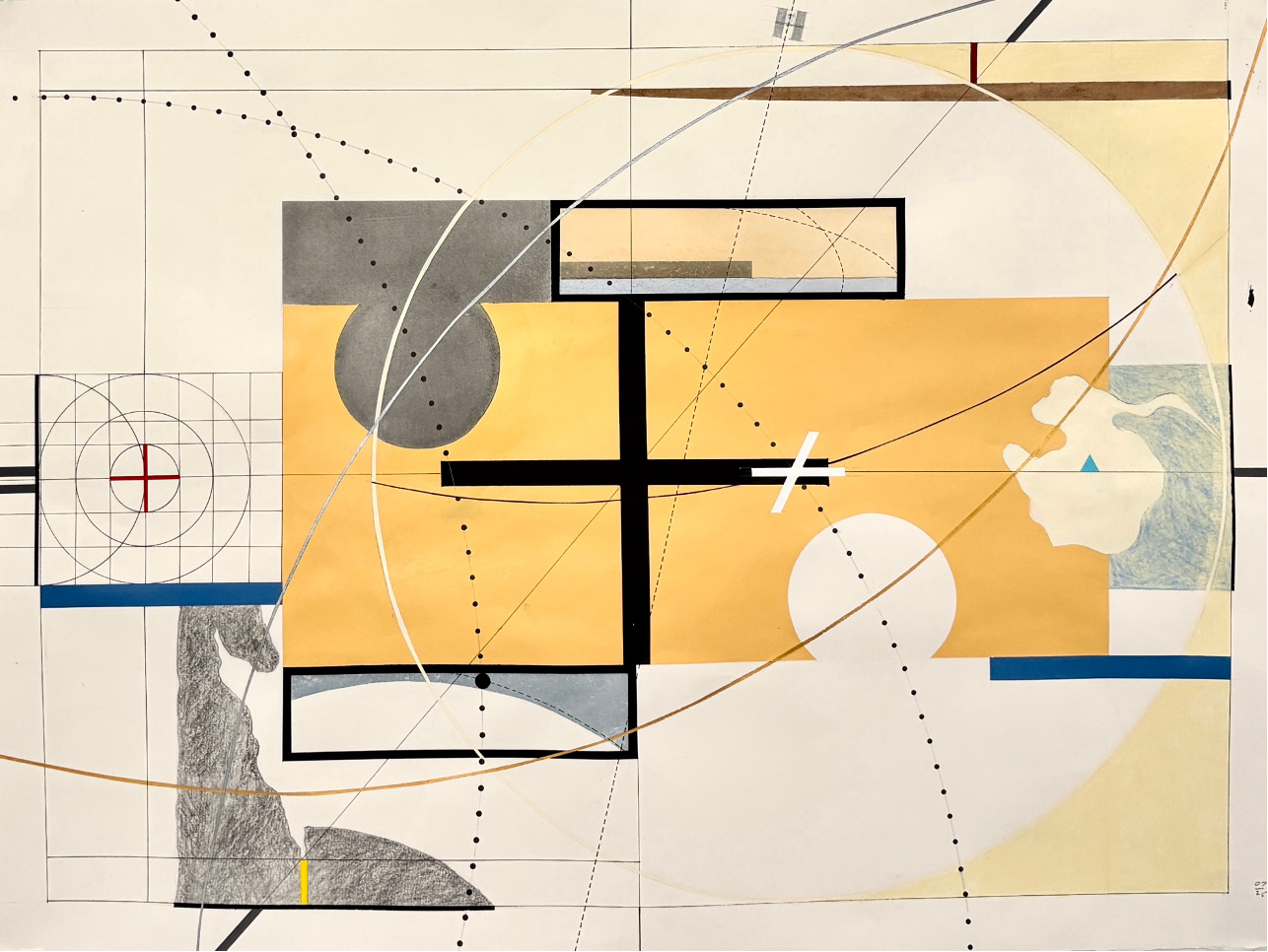
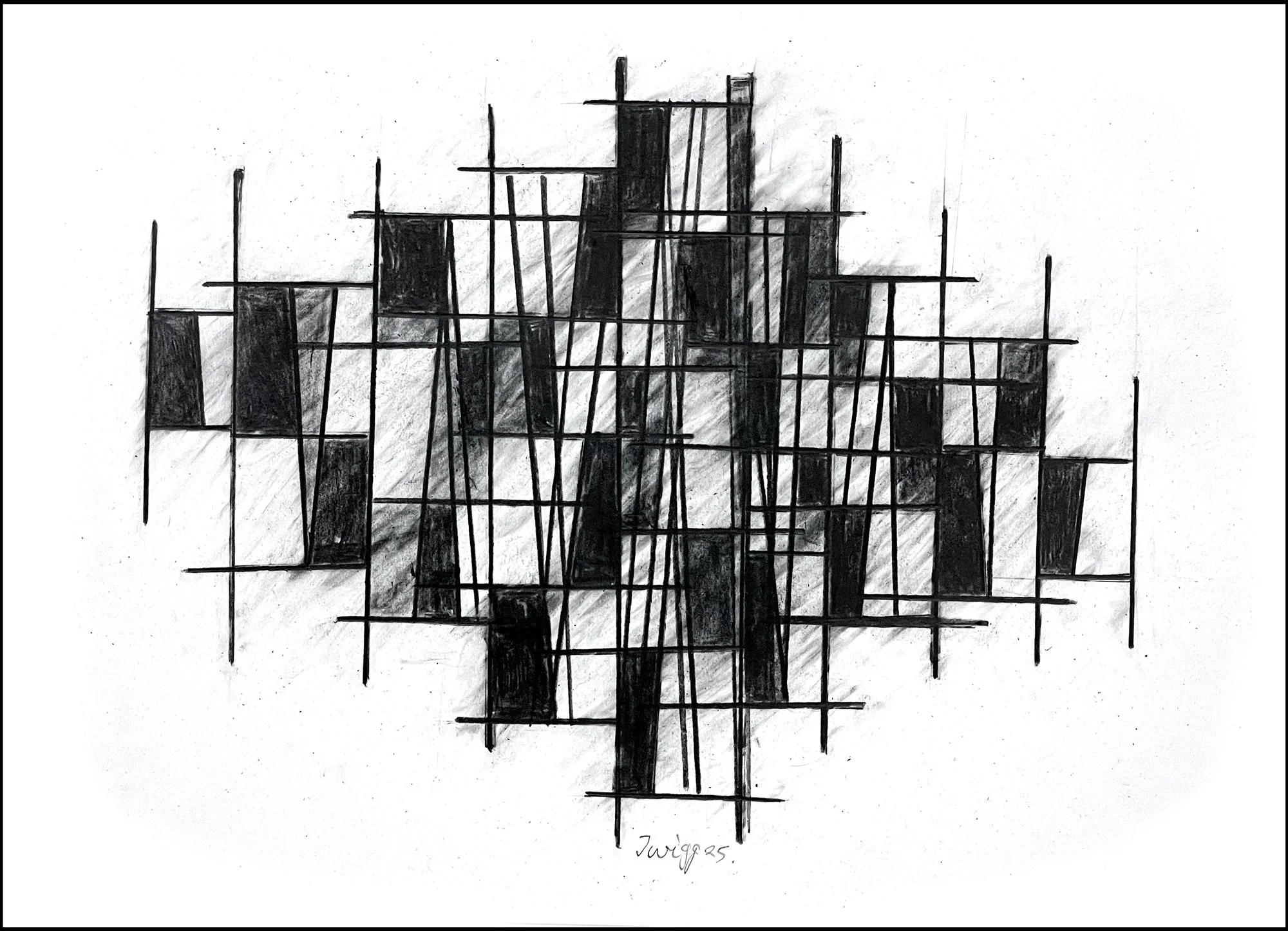
James retired from an illustrious career in architecture to study art at the National Art School. He creates intensely hermetic diagrammatic drawings that index experiences, phenomena and ideas.
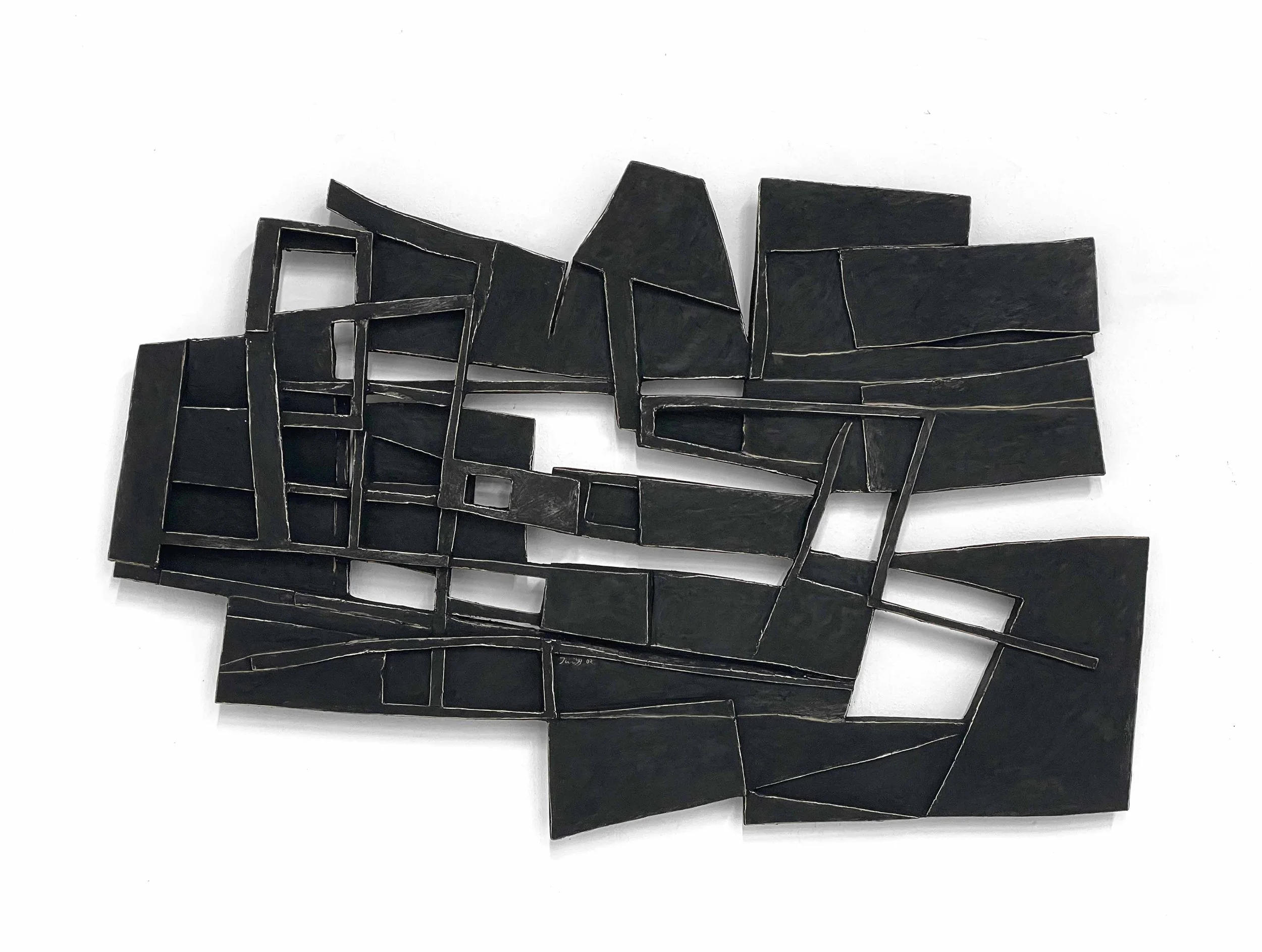
Tony is an urban artist and experimental gallerist (Slot Projects, Slot Window) who has exhibited since the 1970s and has strong connections with contemporary art in the Philippines. He remains an ardent drawer and constructor of hybrid forms entangling drawing, painting, and sculpture.
Each has developed individuated visual, material and procedural practices, informed and inspired by place, the course of their lives, knowledge of art and alternative cultural histories.
Join the artists and DRAW Space community to celebrate from 6pm, Thursday 28 May.
Opening night wine by Famelia.
Click the image on the left to download a pdf copy of the exhibition room sheet.
Curator’s Notes
This is an exhibition of drawing works by three older men whom I know as inspiring friends, but none of whom knew each other. Jeff Doring (b.1942), James Grose (b.1954), and Tony Twigg (b.1953) are artists who continue to work, explore, and expand their drawing practices in the later decades of their lives.
Jeff exhibited at Gallery A, Sydney, and made films focused on three visionary artists: Tidikawa (Tidikawa and Friends, 1973), Morris Louis (Morris Louis - Radiant Zones, 1978), and Wibalma (Pathway Project, 1992-2001), the last of which was also extensively documented in the book Gwion Gwion. For decades, he has drawn and painted in response to his experiences and the sandstone country at Origma Creek, where
he lives.
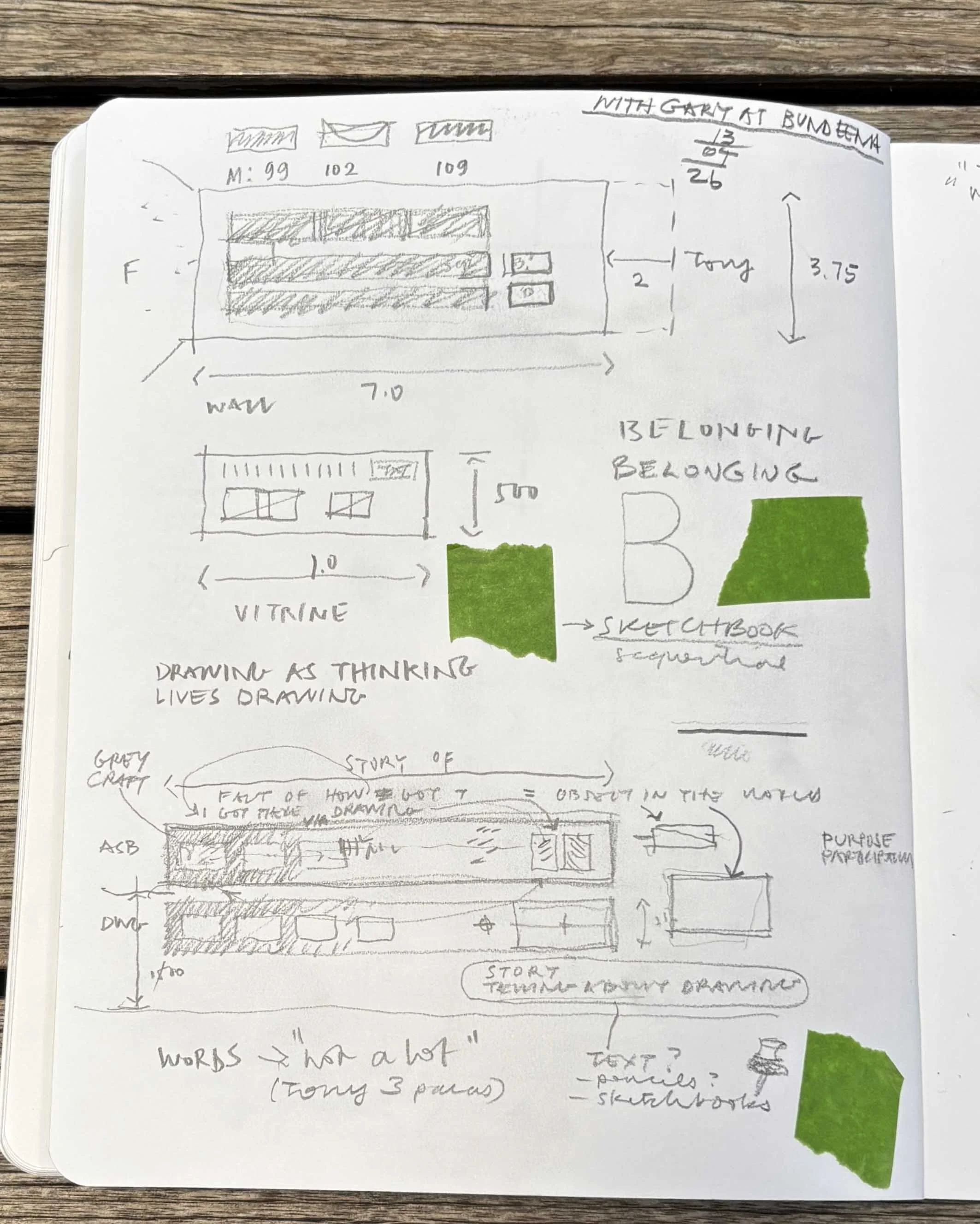
James retired from an illustrious career in architecture to study art at the National Art School. He creates intensely hermetic diagrammatic works that index experiences, phenomena, and ideas, which he plans and thinks through by habitually drawing in sketchbooks.
Tony is an urban artist and experimental gallerist (Slot Projects, Slot Window) who has exhibited since the 1970s and maintains strong ties to contemporary art in the Philippines. He remains an ardent drawer and constructor of hybrid forms entangling drawing, painting, and sculpture.
Each has developed individualised visual, material, and procedural practices, informed and inspired by place, the course of their lives, knowledge of art, and alternative cultural histories.
I asked each artist to provide a text to accompany their works in the exhibition.
Gary Warner, Curator
Artist Statements
TONY TWIGG
Constructed Drawing
I look on the carpentry in my work as drawing. It is an indelible drawing that cannot be concealed or negated by paint. Paint serves to “orchestrate” my drawn structures. Paint can expose isolated elements of the structure in a way that may propose change. But paint remains the servant of the structure, always.
This approach to art making evolved through my engagement with Manila, which began by chance in 1995. On a stop-over visit between Europe and Sydney. Manila spoke to me in a way that instantly evoked memories. Memories that have played out across successive visits over the last 30 years and in many exhibitions of my work.
Early in my engagement with the city, I wrote that I enjoy the way Filipinos put two sticks together, meaning that I feel an aesthetic empathy with the utilitarian objects that are crafted from discarded materials in the urban environment. I read humanity in these intuitively assembled objects that I hope to find in my art making, which I like to think of as shared humanity.
Travelling between Manila and Sydney, a kind of home town, I was prompted to look “sideways”. I spent time in Kuala Lumpur and Singapore, where my art is also exhibited. Along the way, humanity became a chameleon, taking on a different guise in response to the idiosyncratic qualities of particular cities. In each, we see what we know, but what do we share?
It is a point Eric Torres, a Filipino poet, museum curator and art critic, touched on in his review of the show Spontaneous Architecture, he concluded. “Take, for instance, the circle – the only perfect geometric shape the artist superimposes on a scatter of irregular lines. It not only provides a binding device and a central point of focus, it also calls to mind (at least to a Pinoy gallery goer) a used car tyre that serves as makeweight atop many a shanty’s galvanised-iron roof – to keep it from being blown away by a gust of wind!”
JAMES GROSE
On Sketchbooks
I was given my first sketchbook at eighteen while working as an assistant to the Brisbane architect Neville Lund. He had designed my parents’ house and taken me on for a year before I began formal studies. He gave me a sketchbook and a 6B pencil, along with advice that changed my life: carry the sketchbook everywhere. Good advice – though not always easy to follow.
I’ve kept and used sketchbooks since, with varying degrees of consistency - though sketchbook is perhaps a misnomer; they are more accurately thinkbooks. While they contain drawings of landscapes, people, objects, and events, their real purpose has been to think with.
German philosopher Immanuel Kant described the hand as “the window to the mind”, and Finnish theorist Juhani Pallasmaa wrote that “the pencil in the hand … becomes the bridge between the imaging mind and the emerging image”. I think of drawing as the conjunction of mind, hand, pencil, paper, and book. Acting through the hand holding the pencil, the mind in the body records and externalises thought.
The tactile connection between pencil and paper seems to call ideas to appear, with the hand operating seemingly independently, making marks that are so fine as to be barely perceptible or swathing a page in solid 6B graphite. In any case, what is revealed on the page cannot be revealed in the mind – on the page, these marks that seem to come from nowhere have form, direction, energy, and maybe even delight. They take one to new places, to solutions and propositions.
The sketchbook is my visual diary, in many ways it is my companion, and on occasion, when I have lost one, I have grieved – it somehow contains thoughts that can only belong on those pages. Architects and artists have been using these books forever, and sometimes, when I see their sketchbooks, I secretly think they are more interesting than the finished building or artwork.
During their lives, the artist JMW Turner filled more than 300 sketchbooks, while the architect Le Corbusier used 73. Corbusier didn’t study architecture at university – his architectural sensibility was developed by travelling extensively (at the suggestion of a tutor), using notebooks and sketchbooks to develop his understanding and analysis of the architecture of the past.
JEFF DORING
Notes on drawing
All my drawings must invite a viewer to come closer. That is one quality of drawing I value because if working on bush subjects and themes, it simply reproduces the occasions when I step closer to inspect something, retaining details in memory long after that initial event, so events become connected over time, again and again. I mainly leave recognisable objects aside in lieu of glimpses of their form.
Drawings in this category echo living here, where, as years go by, all new experiences eventually become compared, connected, and understood in various other relationships, across time out there and across one life. Living here. Artists travel around in their mind to value this or that, but can never escape time as the greatest influence, so I hope my drawings suggest time to bring viewers closer to the drawing and its subject.
Another issue is the perspective of the artist in contrast to a viewer engaged later, at another time; like making love has moments that can never be replicated to a later audience. Viewing drawings also demands different positions, from standing back to have a full overview to approaching close to inspect the finest details, in my case, almost invisible white lines engraved into the paper with a sharpened bone. Then a frontal view is altered by looking from a position on one end along towards the other, so the starting of drawing makes other fresh combinations of line, and worked surfaces are activated with dry ochres and crayons.
Water, being my main subject, also means some flows of lines will include, or be interrupted by, bursts that may have come from a bird intervening for a moment. These lines are not composed to be descriptive but rather a reflection or echo of things alive. I do want to hold all my experiences together when making a full drawing, so in all honesty, some influences external to the 'event' of the drawing can never be excluded from consideration.
One aspect of drawing here at Origma Bird Sanctuary is that the sandstone country continually influences my hand. Birds talking every day create "ideas" in their sounds that easily come out in lines and gatherings of marks. I do not deliberately plan to insert them, so
much as let them instinctively influence my hand during drawing. A close inspection of some drawings will reveal repetitions that echo the insistent calls of neighbours here, and may contain a vague ghost of the "old people" who once lived here.
Sandstone country has an inevitable force on the hand as lines develop, not describing a form but influenced by the stages of layering and irregular erosion of rock and their surfaces. I know when the union with the “living works of art” here is a full connection, but the limits of this medium will never "capture" or adequately express that sense… so questions I have applied to my work always end up with a hope, not a reality. The reality of lines and forms here is supreme, with meanings or metaphor, dependent on one living here, as a resident, not a visitor.
Just a glance at these words confirms their futility in responding to what we see, and if drawing is about anything, it is about seeing, not only what, but how, not only on exhibit but during its development until conclusion. When making a full drawing that involves other experiences, beyond my home, walking “out there” with Ngarinyin or Arrente colleagues, their voices are never represented directly, but our mutual conversations may be noted in discreet marks or sometimes disguised symbolic marks. Those conversations change as they get closer to an important idea, and they slip into a speech manner known as “flowing words” or “worri unbun”. A similar restraint will be used to direct a certain clear focus that immediately touches my hand to draw very calmly, controlling spaces on paper with more stealth and direct lines with maximum firm control.
That situation, while drawing, is different to earlier stages when compositions first form, and inventions occur more often, although no rules dictate my hand, so sometimes, for meaningful reasons, the balance between open invention and across to an opposite drawn surface, condensing imagery in lines that merge and fuse into form. We can never know when the interaction between both extremes of drawing will unveil/unleash a fresh invention in a moment to make marks unknown until that sudden moment when you first see it.
The very firm yet sinuous lines of ironbarks that insist on growth upwards and outwards all begin in one direction. Then, the ironbarks change, curving through a bend, then surge again, stretching out, always guiding my hand in making lines, whereas a bloodwood gives slower curves and gentler profiles, suggesting an almost spiral momentum. All these lines learned from local trees are then confronted by other kinds of geometry in leaf and branch, composed in combinations that insist on more concentrated movement before a point of completion means leaving the paper. Examples may suggest some clarity to the process of drawing things in as the first step.
I usually start absorbing what is seen by drawing it inside while walking; then, later, I can start putting something outside again by marking things down.
When initiating most drawings, there come moments that lead me into a consistent engagement with every contrast of scale. Consider both the small and larger elements of a subject that demand a closer inspection to trace details or subtle illuminations that suit the form or lack of definition. Consider how wide the expanse of a large drawing can contain spatial layers ranging from almost infinite spaces eyes cannot hold or embrace, or the finest details examined to sometimes compose within a complex confusion.
If I hope to make something following the observational trajectory of walking in the bush, I need to include lines that imply the rising verticals of a variety of growing vegetation, and include the fallen residue of seasons, collected on the ground and on rocks. Many minute pieces of line have to belong together across the surface with expansive veils of atmosphere like mist after rain or afternoon light broken apart by trees, so beams of white light extend across the drawing, not just settle on a convenient place. How the large and small are brought together is what makes drawings interesting to make and compose according to the instincts of experience.